Fewer sessions does not always mean fewer shoppers
Shopify says improved bot detection may lower human-filtered session counts. Orders, sales and customer data are outside this change.
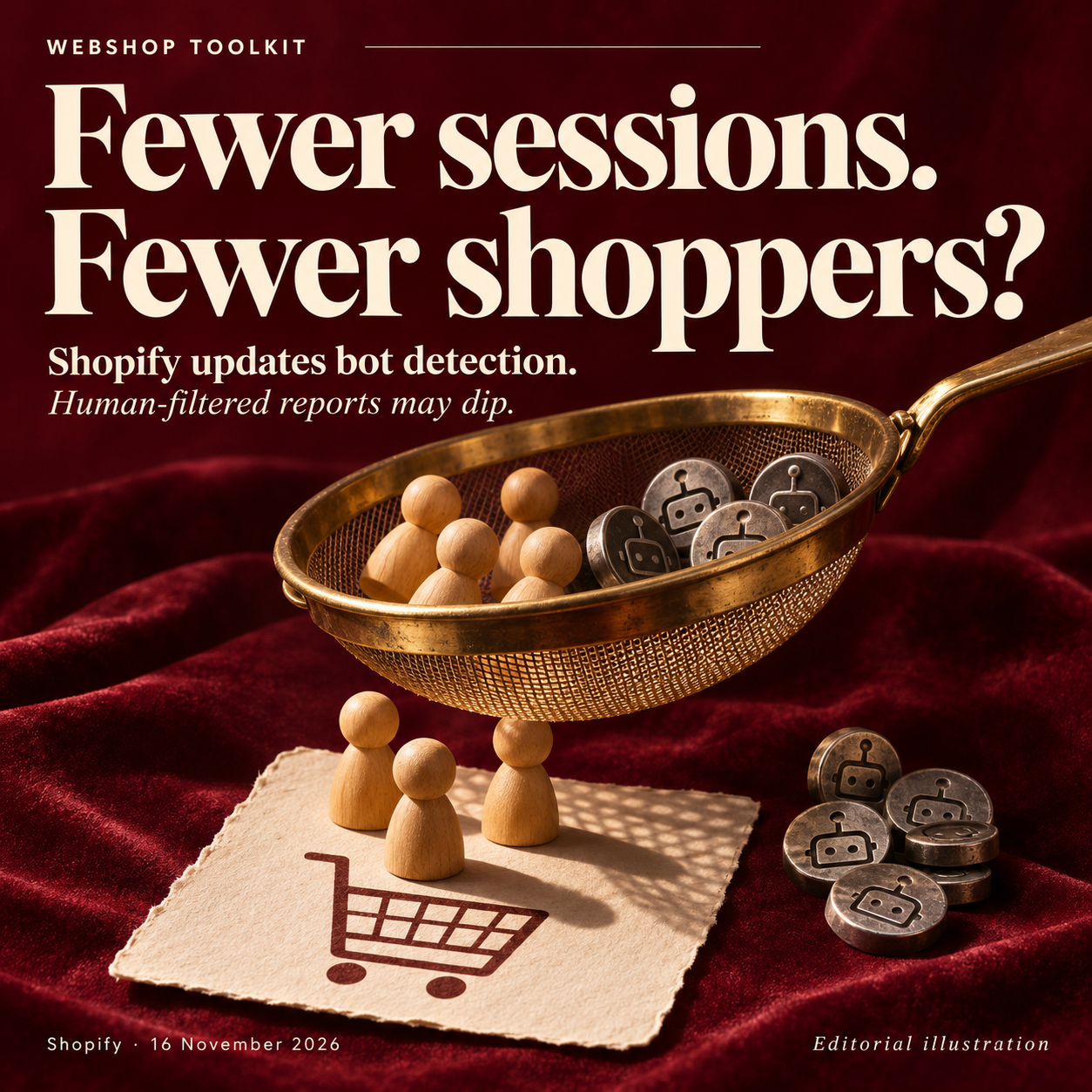
A dip in your traffic report may need a measurement check before a marketing response. On 16 November, Shopify announced improved detection of bot activity in carts and checkouts. The company says reports using a human-based filter might show a small reduction in sessions. Orders, sales and customer data are not part of this change.
For European merchants using Shopify Analytics, the distinction matters when comparing campaign performance across the update. A smaller filtered session total does not, by itself, establish that fewer people visited or that demand weakened. Nor does the announcement prove that any particular shop’s traffic decline comes from bots.
Shopify’s documentation lets merchants view human sessions, bot sessions or both in reports that support the filter. Analytics filtering is different from blocking bots from reaching the storefront; useful automated visits can include search indexing and link previews.
Before changing advertising budgets, record the report’s filter and date range, compare the session split where available, and review orders and sales separately. Treat a conversion-rate movement cautiously if its session denominator changed. This is a reporting check, not evidence that campaigns improved or deteriorated. The announcement gives no universal percentage adjustment to apply to your own store.
Sources: Shopify Changelog, 16 November 2026; Shopify Help: bot filtering. Checked 18 November 2026. Practical advice is editorial interpretation.