The parcel needs a paper trail.
Low-value ecommerce imports into the EU now need product identifiers in customs declarations. A barcode is only one part of the data trail.
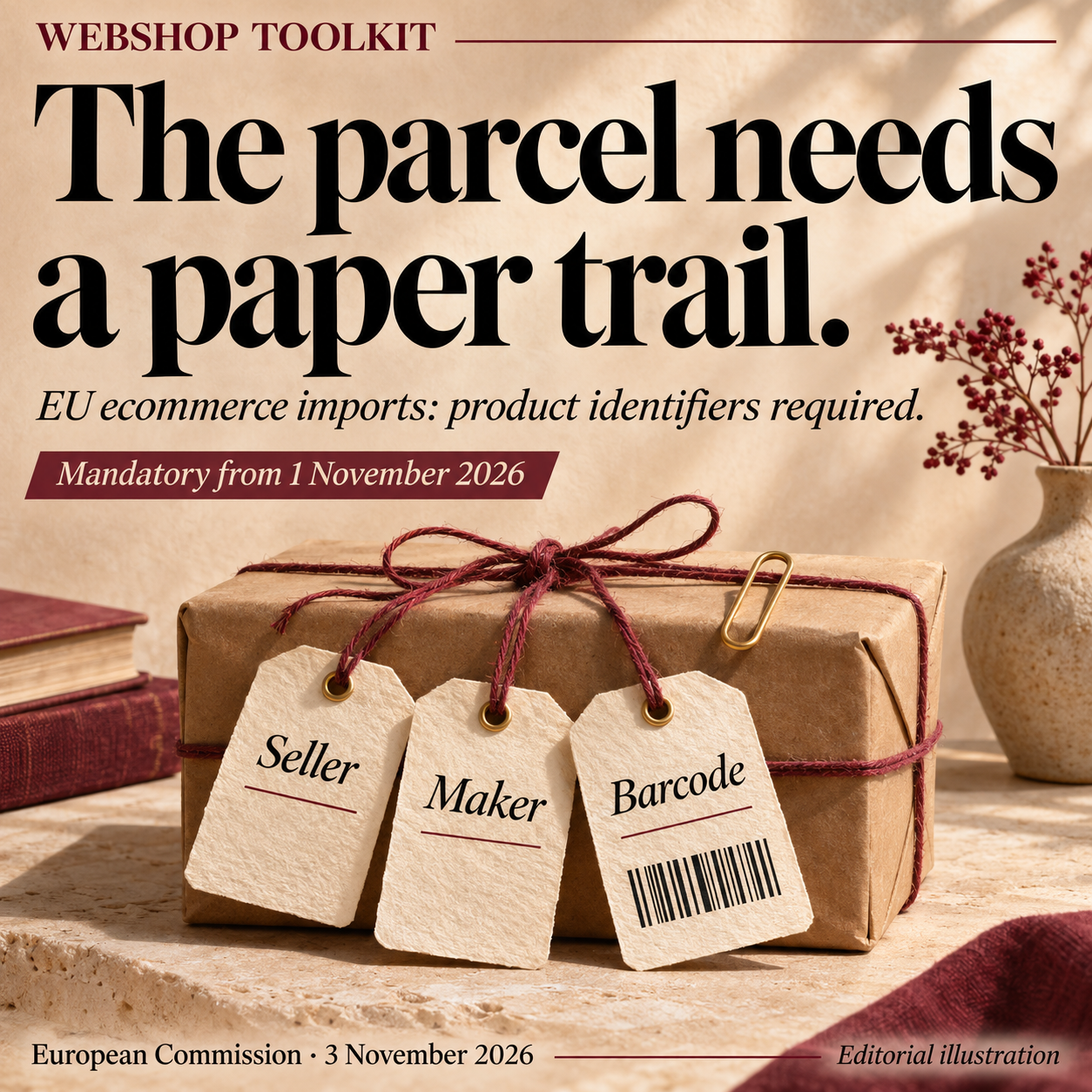
The European Commission says product identifiers became mandatory on 1 November for ecommerce imports sold to EU buyers. Its detailed guidance describes the scope as distance sales of imported goods in consignments with an intrinsic value of no more than €150, mainly consumer purchases.
Three identifiers serve different purposes: the merchant reference traces the online offer; the manufacturer’s own model, part or style reference links it to its maker; and a standardised identifier, such as an EAN, UPC or ISBN, identifies the product internationally. Where no standardised identifier exists, the declaration needs the applicable exemption code.
The Commission’s 3 November announcement says the declarant reports the identifiers, with data passed along by platforms and manufacturers. These references often already exist in listings, invoices or packaging. The practical issue is getting them into the customs data supplied for the shipment.
Our take: if your shop sells goods shipped directly from outside the EU, ask your customs representative which fields they receive and compare them with one real product’s listing and supplier records. Do not assume that printing a barcode on the parcel completes the declaration.
This briefing summarises the Commission’s announcement and guidance. Domestic and intra-EU deliveries are not the import flow described here; check the linked guidance for the shipment’s specific treatment.
Sources: European Commission announcement, 3 November 2026; Commission guidance, version 5 October 2026, section 8. Checked 5 November 2026. Read the guidance for scope and exceptions. Practical advice is editorial interpretation.